Residential flea and tick yard and interior control requires interrupting four distinct developmental stages: egg, larva, pupa, and biting adult. In Piedmont microclimates like Greenville County, the Clemson University…
Residential flea and tick yard and interior control requires interrupting four distinct developmental stages: egg, larva, pupa, and biting adult. In Piedmont microclimates like Greenville County, the Clemson University Cooperative Extension documents peak parasite activity spanning from April through late October, driven by sustained relative humidity above 70%. When companion animals or urban wildlife introduce ectoparasites into living areas, adult fleas account for only 5% of the total infestation volume. The remaining 95% exists as microscopic eggs, larvae, and pupae hidden deep inside carpet pile, hardwood baseboard seams, and resting furniture cushions. Interior remediation utilizes specialized adulticides paired with pyriproxyfen or methoprene, synthetic juvenile hormone mimics regulated under the EPA Office of Pesticide Programs that chemically prevent viable pupation. Property occupants vacate treated indoor spaces for an mandatory drying window of 2 to 4 hours to satisfy environmental standards enforced by the South Carolina Department of Health and Environmental Control before re-entry.
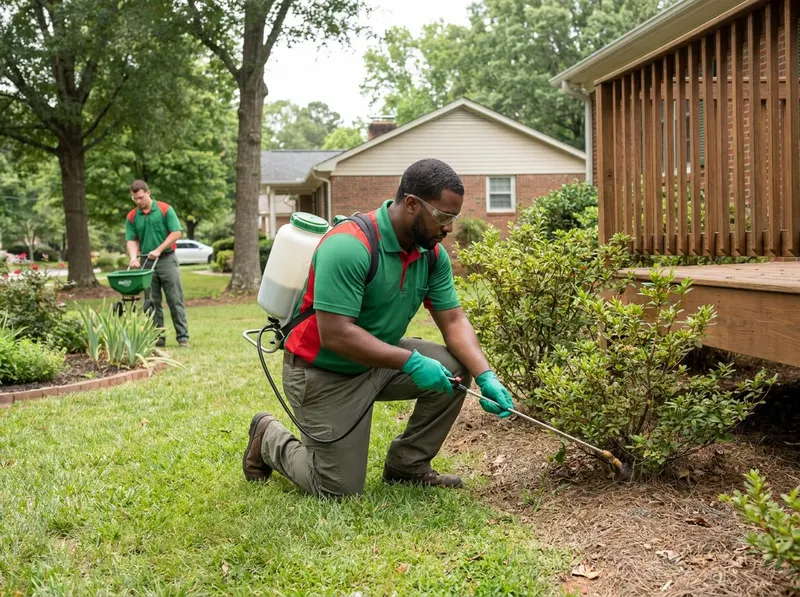
Outdoor treatment establishes a protective perimeter barrier across turf, shaded soil, and foundation foliage where questing ticks congregate. The Centers for Disease Control and Prevention identifies the blacklegged tick as the primary vector for Lyme disease bacteria, while lone star ticks transmit ehrlichiosis throughout Upstate South Carolina. In mature Greenville neighborhoods featuring dense hardwood canopies such as Alta Vista, Augusta Road, and North Main, deep leaf litter and shaded groundcover create humid nesting pockets shielded from direct ultraviolet degradation. Technicians target damp yard perimeters up to 30 feet from structural foundations using microencapsulated pyrethroids formulated to withstand typical Upstate precipitation without washing into municipal watersheds. Organic property borders adjoining recreational networks like the Swamp Rabbit Trail or creek basins near the Reedy River receive targeted residual applications calibrated according to National Pest Management Association standards. These treatments neutralize female ticks before they can complete a blood meal and deposit up to 3,000 eggs into pine straw mulch beds.
Selecting standalone exterior treatment versus an integrated indoor-outdoor plan depends directly on domestic exposure. If domestic pets show active scratching or flea dirt inside living spaces in Parkins Mill or Overbrook, exterior lawn treatment alone will fail because pupae inside household baseboards continue emerging for up to 21 days. Mechanical vacuuming prior to chemical application physically lifts the carpet nap, removes pupal casings, and stimulates dormant adults to emerge into the residual material. The structural preparation sequence follows five definitive steps:
Step 1: Thoroughly vacuum all rugs, upholstered chairs, baseboard edges, and pet bedding areas across the entire home, discarding the vacuum canister debris into an exterior waste receptacle.
Step 2: Clear all interior floor areas of small items, toys, and pet feeding bowls to expose complete baseboard surfaces.
Step 3: Mow the lawn to a height between 2.5 and 3 inches to maximize residual pesticide contact with soil and base vegetation according to South Carolina Department of Agriculture pesticide safety regulations.
Step 4: Technicians apply designated interior growth regulators alongside fine exterior perimeter microencapsulated mists.
Step 5: Occupants and pets maintain a 3-hour re-entry clearance until all interior floor surfaces and exterior grass blades dry completely.
Exterior treatments in newer suburban parcels across Gower Estates or Botany Woods require careful separation between lawn treatment zones and non-target areas. Pollinator habitats must be avoided in accordance with guidance from the Xerces Society for Invertebrate Conservation, preventing application on blooming flowering plants or honey bee foraging zones. Technicians also evaluate physical runoff risks into domestic vegetable gardens and ornamental koi ponds, complying with runoff reduction parameters established by the USDA Natural Resources Conservation Service. In tighter architectural layouts found throughout The Village of West Greenville or Nicholtown, crawl space vents and shaded foundation piers demand specialized dusting with amorphous silica gel under Occupational Safety and Health Administration safety protocols to halt wild animal flea transfers under subflooring without leaving chemical odiferous residues inside sleeping quarters.
Every job gets a firm, written price after an on-site visit.
Tell us about your flea and tick yard and interior control job in Greenville and we'll send a clear, written quote, usually the same day.
 MapleHaven Exterminators