Rodent activity in Upstate South Carolina accelerates during autumn cooling periods when field populations migrate toward conditioned spaces. In Greenville, Norway rats (Rattus norvegicus) and roof rats (Rattus rattus)…
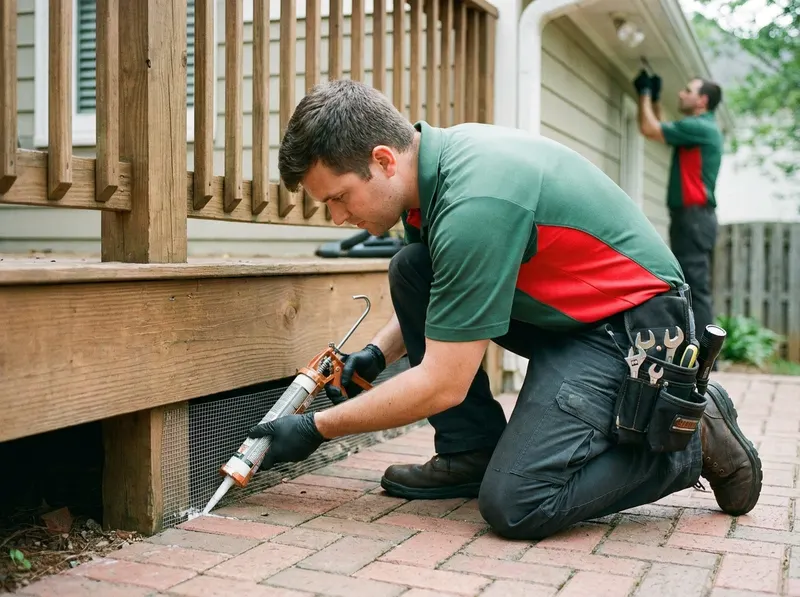
Rodent activity in Upstate South Carolina accelerates during autumn cooling periods when field populations migrate toward conditioned spaces. In Greenville, Norway rats (Rattus norvegicus) and roof rats (Rattus rattus) exploit crawl spaces, attic soffits, and weep screeds to establish indoor harborage. MapleHaven Exterminators approaches rodent defense by targeting entry biology rather than relying on broadcast chemical poisons. Conventional bait stations outside a house fail to stop pests from chewing through vinyl siding or nesting inside wall cavities. A biological defense requires sealing every opening larger than 0.25 inches with materials capable of resisting persistent incisor pressure.
Older architectural designs throughout Augusta Road, Alta Vista, and North Main frequently feature fieldstone foundations, decorative crawl space vents, and complex roof junctions that settle over time, opening hidden entryways. Modern developments in Gower Estates and Botany Woods often present unsealed utility penetrations where HVAC lines, plumbing stacks, and electrical conduits enter exterior siding. Roof rats, agile climbers that use overhead canopy branches near Paris Mountain State Park and Cleveland Park to reach elevated trim, find unbacked fascia transitions and gable vents. Sealing these entryways demands non-corrosive, physical blockades that withstand South Carolina humidity.
Property owners executing a rodent remediation program move through a five-step mechanical exclusion sequence:
Choosing targeted rodent exclusion instead of temporary perimeter baiting involves an initial labor commitment in exchange for permanent structural defense. Trapping alone reduces active numbers but leaves crawl spaces open to fresh rodent litters migrating from nearby landmarks like the Swamp Rabbit Trail or the Reedy River basin. Conversely, permanent exclusion repairs the building envelope directly, stopping wildlife intrusions without introducing toxic compounds into attics or walls where pets and children live. Field guidelines by the Environmental Protection Agency recommend physical sealing as the primary defense against commensal rodents.
Every job gets a firm, written price after an on-site visit.
Tell us about your targeted rodent exclusion job in Greenville and we'll send a clear, written quote, usually the same day.
 MapleHaven Exterminators